










Suni Lee Parents: The Inspiring Story Behind the Olympic Champion
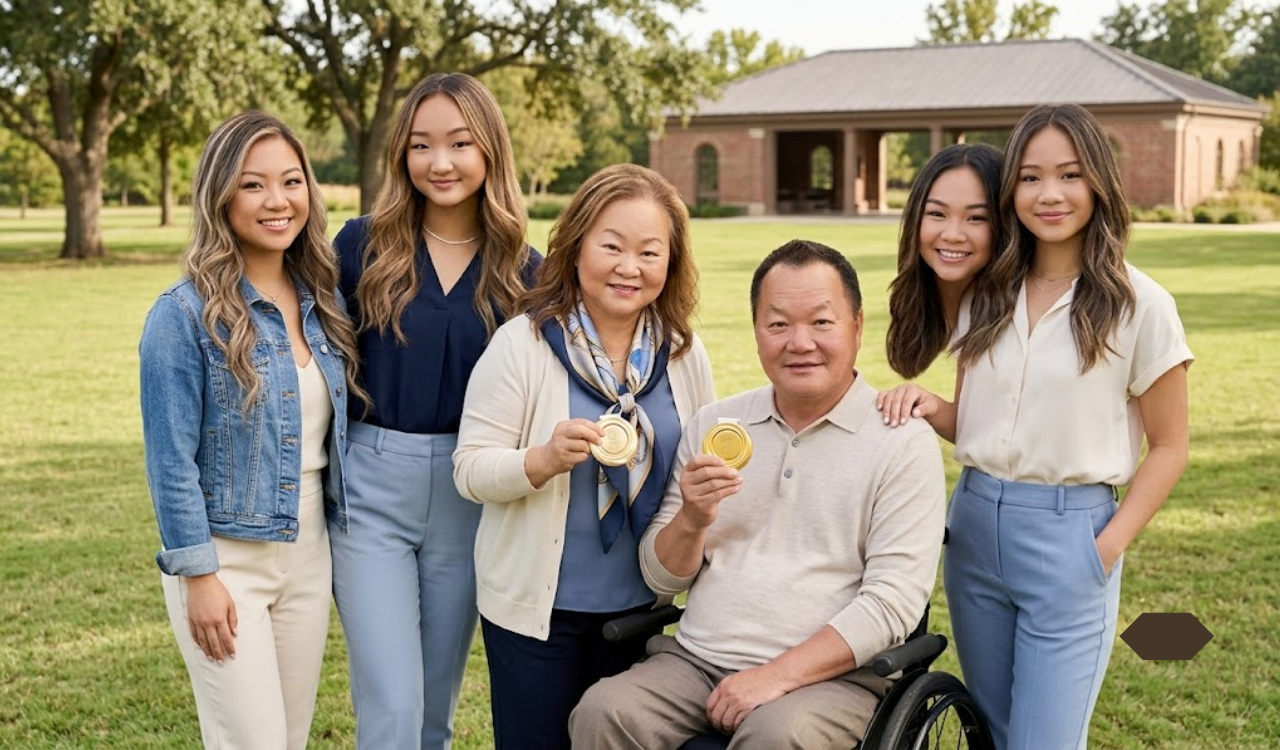
In the world of elite gymnastics, few stories are as captivating as that of Sunisa “Suni Lee Parents” Lee, the Olympic all-around champion who captured the hearts of millions during the Tokyo 2020 Olympics. While her extraordinary talent and unwavering determination have rightfully placed her in the spotlight, the foundation of her success lies in the unwavering support, sacrifice, and love of her parents, Yeev Thoj and John Lee. Their journey from war-torn Laos to the United States, their struggles as immigrants, and their steadfast commitment to their daughter’s dreams form a narrative that is just as compelling as Suni’s athletic achievements. This article delves deep into the lives of Suni Lee Parents, exploring their background, their role in her career, and the profound impact they have had on shaping one of America’s greatest gymnasts.
Quick Bio Table
| Attribute | Details |
|---|---|
| Mother’s Full Name | Yeev Thoj |
| Father’s Full Name | John Lee |
| Ethnicity | Hmong |
| Country of Origin | Laos |
| Immigration to USA | As refugees through Thailand after the Vietnam War |
| Mother’s Occupation | Associate Care Manager for a health insurance company |
| Father’s Occupation | Applications Engineer; U.S. Navy and Army Veteran |
| Relationship Status | Long-term partners (not legally married) |
| Children Together | Three children: Evionn, Lucky, and Noah |
| John’s Children from Previous Relationship | Jonah and Shyenne (step-siblings to Suni) |
| Biological Father of Suni | Not John Lee (John met Yeev when Suni was 2 years old) |
| Current Residence | Minnesota, USA |
| Key Contribution | Building a makeshift balance beam for Suni’s early practice (John); emotional and logistical support throughout her career (both) |
A Journey Across Continents: The Hmong Refugee Story
To truly understand Suni Lee Parents, one must first understand the history that shaped them. Both Yeev Thoj and John Lee are of Hmong descent, an ethnic group that has faced persecution and displacement for decades. During the Vietnam War, the Hmong people allied with the United States in the secret war in Laos, fighting against communist forces. When the war ended in 1975, the Hmong became targets of retaliation, forcing hundreds of thousands to flee their homeland.
Yeev and John were among those who escaped. They arrived in the United States as refugees through Thailand, carrying with them the hopes of a better life. John was just seven years old when he settled in America, while Yeev was twelve. The transition was anything but easy. They arrived with little more than the clothes on their backs, unable to speak English, and faced the daunting challenge of building a new life in an unfamiliar land. They eventually settled in Minnesota, which today boasts the largest Hmong population of any U.S. city, creating a vibrant community where their cultural traditions could be preserved.
Suni has often spoken about her parents’ journey with immense pride and gratitude. She once reflected on their sacrifices, saying that their decision to leave their homeland was driven by a desire to provide safety and opportunity for their future children. That profound sense of purpose became the driving force behind everything Yeev and John would later do as parents.
A Blended Family Built on Love
Suni Lee’s family structure is a beautiful example of modern blended families. John Lee is not Suni’s biological father. He met Yeev when Suni was just two years old, and from the very beginning, he embraced her as his own daughter. Their bond grew so strong that when Suni became a teenager, she chose to take his last name, a decision that speaks volumes about the depth of their relationship.
John brought two children from a previous relationship, Jonah and Shyenne, into the family. Together, John and Yeev went on to have three more children: Evionn, Lucky, and Noah. Despite the complexities of a blended household, the family functioned as a cohesive unit, with each member supporting one another. Suni has described her siblings as her biggest cheerleaders, and the family home in Minnesota was always filled with laughter, encouragement, and an unshakeable belief in each other.
The family’s Hmong heritage remained central to their identity. Suni Lee Parents Yeev and John made sure their children understood their roots, celebrating Hmong traditions and instilling in them the values of hard work, resilience, and gratitude. Suni Lee Parents has often spoken about how her parents emphasized the importance of staying grounded and remembering where they came from, lessons that have kept her humble despite her meteoric rise to fame.
The Accidental Discovery of a Gymnast
Suni’s journey into gymnastics began almost by accident. Suni Lee Parents When she was six years old, her parents enrolled her in a gymnastics class to burn off some of her seemingly endless energy. What started as a simple extracurricular activity quickly revealed something extraordinary. Suni’s natural talent was undeniable, Suni Lee Parents and it did not take long for her coaches to notice that she had the potential to go far.
John, who had a love for flipping and tumbling as a child, was immediately captivated by his daughter’s abilities. Though gymnastics was not part of Hmong culture, Suni Lee Parents he recognized the spark in Suni and decided to nurture it. In one of the most touching gestures of parental support, John built a makeshift balance beam in their backyard using an old mattress. This humble piece of equipment became Suni’s first training ground, where she would practice for hours, Suni Lee Parents honing her skills before she ever stepped into a formal gym.
Yeev, on the other hand, approached Suni’s gymnastics career with a mixture of pride and anxiety. A self-described nervous spectator, Suni Lee Parents she often admitted that she would hold her breath during Suni’s routines, barely able to watch as her daughter performed gravity-defying flips and twists. Despite her fears, Suni Lee Parents Yeev never let her anxiety stop her from supporting Suni wholeheartedly. She was a constant presence at competitions, offering quiet encouragement and ensuring that Suni stayed focused on her goals.
The Turning Point: John Lee’s Life-Changing Accident
In August 2019, the Lee family faced their most devastating challenge. Suni Lee Parents While trimming a tree at their home in Minnesota, John fell from a ladder. The accident resulted in a severe spinal cord injury that left him paralyzed from the chest down. Suni Lee Parents The news was shattering, not just for John but for the entire family. Suni, who was preparing for the U.S. National Championships at the time, was understandably devastated.
She considered withdrawing from the competition to be by her father’s side, but John refused to let her give up on her dreams. In a moment that would define her career, he told her, “You worked so hard for it, just go.” His words gave Suni the strength to compete, and she went on to win the all-around title at the championships. In her victory interview, an emotional Suni dedicated her performance to her father, saying, “I was thinking of my dad the whole time.”
John’s accident marked a turning point for the family. His paralysis meant significant lifestyle changes, including modifications to their home and adjustments to their daily routines. Yet, through it all, John remained the family’s emotional anchor. His positive attitude and refusal to let his condition define him inspired Suni to push through her own challenges. She has often credited her father’s resilience with teaching her to never give up, no matter how difficult circumstances become.
The Parents as the Ultimate Support System
Behind every great athlete is a support system that makes their success possible, and for Suni Lee, her parents have been that foundation. The financial burden of elite gymnastics is immense, with training costs, travel expenses, and coaching fees adding up to hundreds of thousands of dollars. Yeev and John made countless sacrifices to ensure Suni had everything she needed, often putting her dreams ahead of their own comfort.
When Suni moved away from home to train with her coach, Jess Graba, in another city, her parents supported her decision despite the emotional toll of being apart from their daughter. They maintained constant communication, offering words of encouragement through phone calls and video chats. Yeev would travel long distances to watch Suni compete, never missing an opportunity to support her daughter in person, even when it meant taking time off from her job.
John’s support has been equally profound, particularly after his accident. Despite his physical limitations, he continues to be Suni’s biggest cheerleader, following her career with intense interest and offering advice whenever she needs it. His famous pep talks, where he reminds Suni to enjoy the experience and compete for herself rather than for external validation, have become a source of strength for the young gymnast.
Cultural Significance and Breaking Barriers
Suni Lee’s success holds immense significance for the Hmong community, and her parents have been instrumental in this cultural milestone. When Suni won the all-around gold medal at the Tokyo Olympics, she became the first Hmong American to compete in the Olympics and the first to win a gold medal. This achievement was not just a personal triumph but a victory for the entire Hmong community, which had long been underrepresented in mainstream American sports.
Yeev and John have always emphasized the importance of representation and giving back to their community. They have encouraged Suni to embrace her Hmong identity and use her platform to inspire others from similar backgrounds. Suni has often spoken about how her parents’ immigrant story motivates her to work harder, knowing that their sacrifices paved the way for her success.
The family has received widespread recognition for their contribution to Hmong visibility, with community leaders and cultural organizations celebrating Suni’s achievements as a testament to the resilience and perseverance of the Hmong people. Through her success, the Lee family has become a symbol of hope for immigrants and refugees across the United States.
Balancing Fame and Family
As Suni’s fame has grown, so too have the challenges of maintaining a normal family life. The Lee family has had to navigate the pressures of media scrutiny, public attention, and the demands of Suni’s busy schedule. Through it all, Yeev and John have remained steadfast in their commitment to keeping their family grounded.
They have been careful to shield their younger children from the spotlight, ensuring they have as normal a childhood as possible despite the family’s newfound fame. Suni has often praised her parents for keeping her humble, reminding her that she is still the same person who started her gymnastics journey in a backyard on a mattress balance beam.
The family’s strong ties to their Hmong heritage have also helped them stay connected to their roots. They continue to celebrate traditional Hmong holidays, speak their native language at home, and instill in their children a deep sense of pride in their cultural identity. For Yeev and John, fame has never changed who they are at their core: a family bound by love, sacrifice, and mutual respect.
Lessons from Suni Lee’s Parents
The story of Suni Lee’s parents offers valuable lessons for parents everywhere. First, it highlights the importance of recognizing and nurturing a child’s unique talents, even when those talents fall outside one’s cultural or personal experience. John’s decision to build that backyard balance beam, despite having no background in gymnastics, was a simple yet profound act of love that set Suni on the path to greatness.
Second, Yeev and John’s unwavering support demonstrates the power of parental encouragement. They never wavered in their belief in Suni, even when the costs and challenges seemed insurmountable. Their faith in their daughter gave her the confidence to pursue her dreams fearlessly.
Third, their resilience in the face of adversity is an inspiration. John’s paralysis could have broken the family, but instead, it brought them closer together. Their ability to find strength in the most difficult circumstances is a testament to the power of family bonds.
Finally, the Lee family’s story underscores the importance of cultural identity. Yeev and John never allowed their children to forget their heritage, and in doing so, they gave Suni a sense of purpose that extends beyond gymnastics. She competes not just for herself but for her family, her community, and the generations of Hmong who came before her.
Conclusion
The journey of Suni Lee to Olympic glory is a story of talent, determination, and hard work, but it is also a story of family. Yeev Thoj and John Lee have been the pillars of strength behind their daughter’s success, sacrificing their own comfort to nurture her dreams. Their story as Hmong refugees who built a new life in America, their unwavering support for Suni’s gymnastics career, and their resilience in the face of life-altering challenges are a testament to the power of love and family.
John’s accident could have derailed Suni’s career, but instead, it became a source of inspiration that fueled her determination to succeed. Yeev’s quiet strength and constant presence provided the stability Suni needed to navigate the pressures of elite competition. Together, they have created a family dynamic that is as remarkable as Suni’s athletic achievements.
As Suni continues to inspire millions around the world, her parents remain her biggest supporters, cheering her on from the sidelines just as they have done since she was a little girl practicing on a mattress in their backyard. Their story reminds us that behind every champion is a family that believes in them, sacrifices for them, and loves them unconditionally.
For more inspiring stories about athletes and their journeys, visit my blog site weeklyfanzine, where we celebrate the human stories behind the headlines.
Read More: Christina Marie Plante: The Extraordinary Story Behind a 32-Year Missing Person Case