











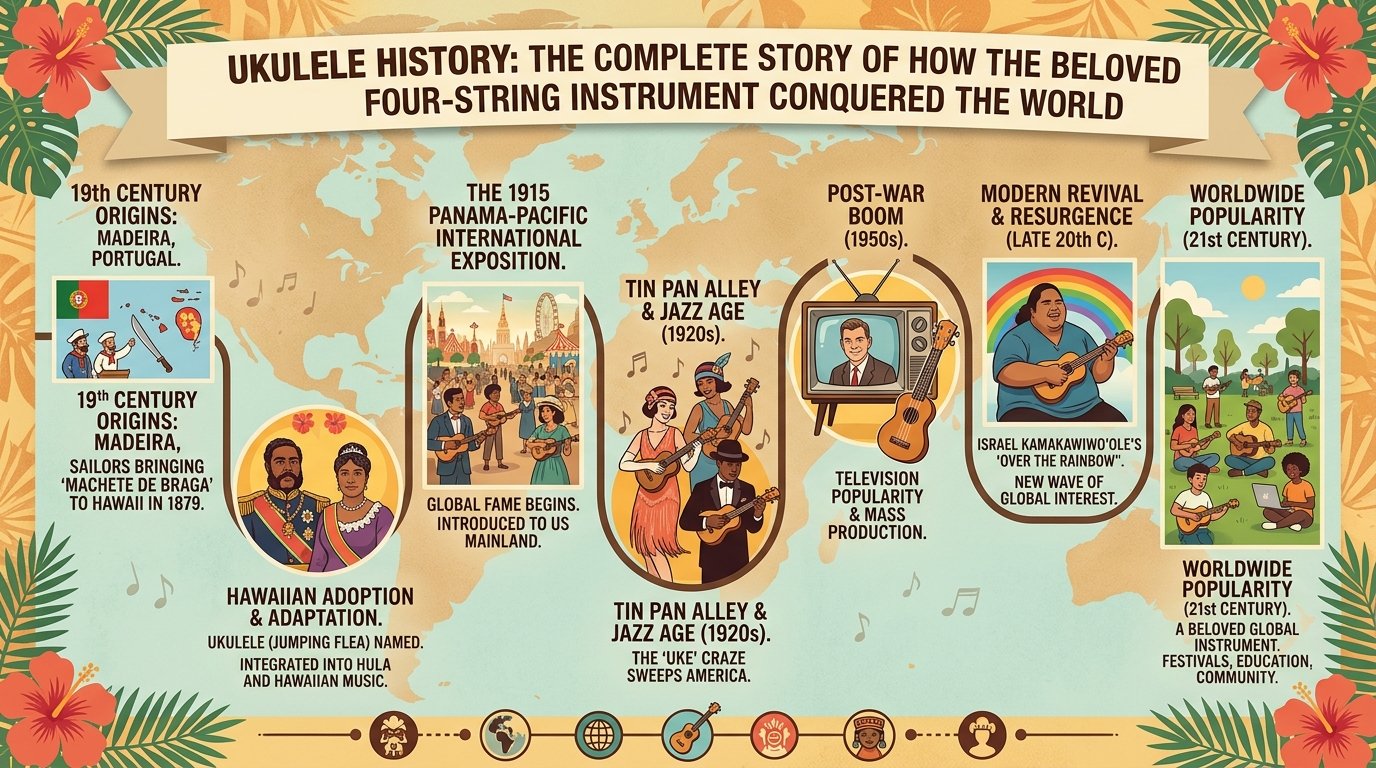
Ukulele History: The Complete Story of How the Beloved Four-String Instrument Conquered the World
The ukulele history is a remarkable story of cultural exchange, creativity, and musical innovation. Although many people associate the ukulele exclusively with Hawaii, its origins stretch far beyond the islands, beginning with European immigrants who carried their musical traditions across the ocean.
Today, the ukulele is one of the world’s most accessible instruments. Its cheerful sound, compact design, and welcoming learning curve have introduced millions of people to music, making its historical journey just as inspiring as the songs it creates.
The European Origins of the Ukulele
The story of ukulele history begins in Portugal during the nineteenth century. Skilled craftsmen from Madeira built small stringed instruments such as the machete, rajão, and braguinha, which would later influence the modern ukulele.
When Portuguese immigrants traveled to Hawaii in 1879 to work on sugar plantations, they brought these instruments with them. Local communities quickly embraced their lively sound, creating the foundation for an entirely new musical tradition.
How Hawaii Shaped the Modern Ukulele
Although European instruments inspired its design, Hawaii transformed them into something unique. Local musicians modified the construction, tuning, and playing style to better complement Hawaiian songs and cultural performances.
The name “ukulele” is commonly translated as “jumping flea,” a reference often linked to the rapid movement of a player’s fingers. Whether entirely accurate or partly legendary, the story has become an enduring part of ukulele history.
Royal Support and Cultural Recognition
One of the defining moments in ukulele history came when Hawaiian royalty embraced the instrument. King Kalākaua was a passionate supporter of Hawaiian arts and encouraged music, dance, and cultural celebrations throughout his reign.
Royal endorsement elevated the ukulele from a community instrument to a respected symbol of Hawaiian identity. Public performances, ceremonies, and festivals helped preserve its growing reputation across the islands.
The Ukulele Reaches the Mainland
The early twentieth century introduced American audiences to Hawaiian music through exhibitions, touring performers, and recordings. Visitors were captivated by the ukulele’s bright tone and approachable appearance.
Its popularity accelerated after the Panama-Pacific International Exposition in 1915. As Hawaiian culture gained international attention, the instrument quickly became a favorite among amateur musicians across the United States.
Evolution of Design and Construction
Early ukuleles were handcrafted using native Hawaiian woods such as koa, prized for their beauty and warm tonal qualities. Each instrument reflected the craftsmanship of local builders who refined the design over time.
Modern manufacturing introduced additional materials, including mahogany, spruce, cedar, and laminate woods. These innovations made the instrument more affordable while maintaining the essential character celebrated throughout ukulele history.
Different Types of Ukuleles
The family of ukuleles has expanded considerably over the years. Each size offers a distinctive balance between portability, comfort, and sound projection.
| Ukulele Type | Typical Scale | Sound Characteristics | Best For |
|---|---|---|---|
| Soprano | 13 inches | Bright, traditional tone | Beginners and Hawaiian music |
| Concert | 15 inches | Fuller and warmer sound | General players |
| Tenor | 17 inches | Greater volume and sustain | Intermediate and advanced musicians |
| Baritone | 19 inches | Deep, guitar-like tone | Guitar players transitioning to ukulele |
The Global Popularity of the Ukulele
The revival of interest during the late twentieth and early twenty-first centuries dramatically expanded ukulele history. Social media, online tutorials, and affordable instruments introduced new generations to playing music from home.
Artists across pop, jazz, folk, indie, and educational settings adopted the instrument because it encourages creativity without overwhelming beginners. Schools and community programs also recognized its value as an accessible teaching tool.
Famous Players Who Inspired Generations
Many musicians helped shape public appreciation for the ukulele. Hawaiian performer Israel Kamakawiwoʻole introduced millions to its emotional possibilities through unforgettable performances that blended traditional and contemporary influences.
Jake Shimabukuro demonstrated extraordinary technical ability, proving the instrument could perform complex arrangements once thought impossible. Their contributions expanded public understanding of what the ukulele could achieve.
“Music is a universal language that connects people beyond words.” This timeless idea perfectly reflects the journey of the ukulele, whose simple design has united cultures across continents.
Common Misconceptions About the Ukulele
A common myth suggests the ukulele is simply a toy or a miniature guitar. In reality, it is a sophisticated instrument with its own construction methods, tuning systems, and performance traditions.
Another misconception is that beginners eventually outgrow it. Professional performers continue to showcase remarkable versatility, reinforcing that ukulele history is still evolving through innovation and artistic expression.
Why the Ukulele Continues to Thrive
Modern musicians value instruments that combine affordability, portability, and expressive capability. The ukulele satisfies all three while welcoming players of every age and musical background.
Its enduring popularity demonstrates that great instruments do not need complexity to create meaningful experiences. As digital learning platforms and global communities continue expanding, ukulele history remains an ongoing story rather than a completed chapter.
Conclusion
The ukulele history reflects much more than the evolution of a musical instrument. It represents migration, cultural exchange, artistic creativity, and the enduring ability of music to connect people from different backgrounds.
From Portuguese craftsmanship to Hawaiian innovation and worldwide recognition, the ukulele has earned its place as one of the most beloved instruments ever created. Understanding ukulele history allows musicians and enthusiasts alike to appreciate not only its cheerful sound but also the rich cultural legacy behind every chord.
FAQ
What is the origin of the ukulele?
The ukulele history begins with Portuguese immigrants who brought small stringed instruments to Hawaii in the late nineteenth century, where they evolved into the modern ukulele.
Why is the ukulele associated with Hawaii?
Although its ancestors came from Portugal, Hawaii transformed the instrument through local craftsmanship, music, and royal patronage, making it a lasting cultural symbol.
What does the word “ukulele” mean?
The name is widely translated as “jumping flea,” referring to the fast movement of a player’s fingers while performing.
Which type of ukulele is best for beginners?
Most beginners start with a soprano or concert ukulele because they offer traditional sound, manageable size, and comfortable playability.
Why is learning about ukulele history important?
Understanding ukulele history helps players appreciate the instrument’s cultural significance, craftsmanship, and global influence beyond its cheerful appearance.